What CIPM’s 58th International Conference Revealed About Nigeria’s Changing Workplace
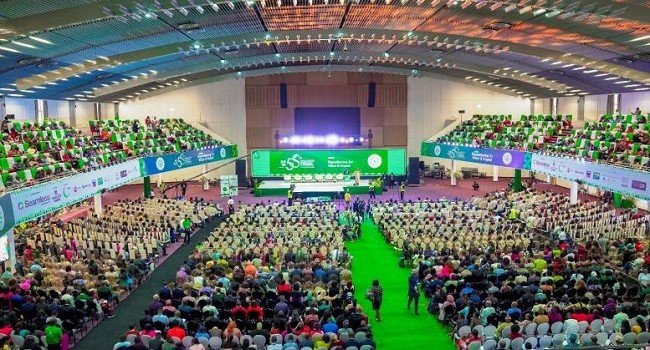
From AI and productivity to leadership, skills and organisational culture, nearly 5,000 delegates gathered in Abuja for CIPM ICE 2026, regarded as Africa’s largest HR event. But beyond the numbers was a bigger question: how must organisations and the people who power them, reposition for what comes next?
A job description written three years ago may already be struggling to describe the job being done today.
Artificial intelligence is finding its way into everyday work. Employees are asking different questions of their employers. Leaders are under pressure to do more with less. Skills are becoming obsolete faster, and organisations are discovering that having talented people does not automatically translate into having a high-performing organisation.
Work has changed.
The more interesting question is whether the way we manage people has changed enough with it.
That question followed many of the conversations at the 58th International Conference and Exhibition of the Chartered Institute of Personnel Management of Nigeria (CIPM), held in Abuja from September 21–24, 2026, under the theme “Repositioning for Value and Impact.”
On paper, it sounds like the sort of phrase one might expect at a professional conference. But across four days of conversations among business leaders, policymakers, HR professionals, academics and other workplace thinkers, it became something far more practical: What exactly is HR doing that makes an organisation better?
It is a question worth asking.
The days of counting activities are disappearing
For years, much of HR’s success could be communicated in activities.
How many people were recruited? How many employees were trained? How many engagement programmes were organised? How quickly were vacancies filled?
Those things still matter but increasingly, organisations want to know what happened
because of them.
Did productivity improve? Are we retaining the people we cannot afford to lose? Are our managers becoming better leaders? Do we have the skills the business will need tomorrow? Is our culture helping or quietly frustrating our strategy?
Perhaps most importantly: can HR connect its work to results that matter to the
organisation?
That was one of the clearest threads running through the conversations in Abuja.
CIPM President and Chairman of the Governing Council, Mallam Ahmed Ladan Gobir, FCIPM,
fnli, put the challenge to delegates plainly: the real value of the conference would not be
determined by what happened inside the venue, but by what people did differently when they
returned to their organisations.
It is an important distinction.
A conference can fill notebooks. Impact has to show up somewhere else – in a better decision,
a stronger manager, a redesigned process, a more productive team, a problem solved or
perhaps even a difficult conversation an organisation has postponed for too long.
Then there is AI
It is almost impossible to have a serious conversation about the future of work today without
artificial intelligence entering the room.
The temptation is to reduce that conversation to one dramatic question: Will AI take people’s
jobs?
But the more useful questions are less dramatic and far more urgent.
Which parts of jobs will change? Which skills will become more valuable? What happens to roles that can now be partially automated? Who decides where AI should and should not be used? How do organisations protect judgement, accountability and trust while pursuing efficiency? and who prepares people for all of this?
That last question puts HR right in the middle of the conversation.
Technology decisions can no longer sit entirely with technology teams. If AI changes how work is performed, it changes jobs. If it changes jobs, it changes skills. And if it changes skills, it changes recruitment, learning, performance, workforce planning and leadership.
Suddenly, AI becomes a people issue too.
The challenge for HR is not to become the IT department. It is to understand technology well enough to ask better questions about its impact on people and the organisation.
Buying technology is relatively easy but building an organisation capable of using it well is harder.
Perhaps we have been talking about HR too narrowly
One of the more interesting things about a gathering of this nature is that the conversation eventually becomes bigger than the profession that convened it.
Talk about people for long enough and one inevitably begins to talk about productivity.
Talk about productivity and one arrives at competitiveness.
Talk about competitiveness in Nigeria and, sooner or later, there is a conversation about national development.
That is why what happens inside HR departments matters far beyond HR departments.
A factory with poorly trained people will feel it in its output. A bank with weak leadership will eventually feel it in performance. A government institution with the wrong culture will make citizens experience the consequences. A company that cannot retain critical talent will eventually discover the cost on its balance sheet.
People management, therefore, is not merely about keeping employees happy.
At its best, it is about creating the conditions in which people can do work that produces value. That is a much bigger responsibility and it explains why a CIPM conference increasingly brings together voices beyond traditional HR circles.
Nearly 5,000 people gathered for its conference but the number isn’t the story
The 58th International Conference and Exhibition attracted 4,905 delegates – 4,020 physically
and 885 virtually – drawn from public and private sector organisations.
For any professional gathering, those are significant numbers but attendance alone is an easy
metric.
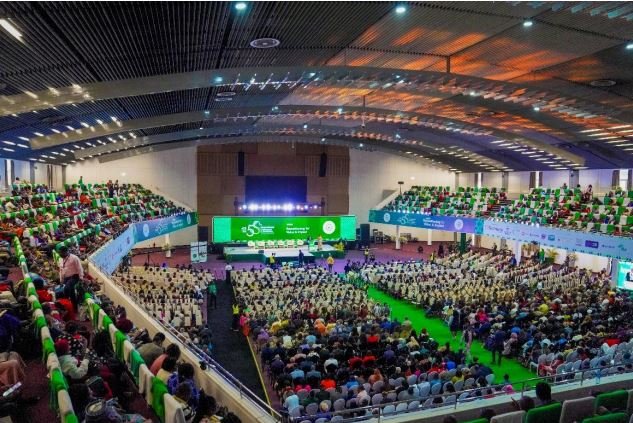
The more consequential question is what happens when nearly 5,000 people return to thousands of different desks, teams, organisations and spheres of influence.
Does anything change?
That may be a better measure of the conference than the number of people who walked through its doors.
Because the danger with professional conferences is familiar.
People arrive enthusiastic, notes are taken, photographs are shared, business cards are
exchanged and LinkedIn fills with reflections.
Then Monday comes.
The inbox is waiting and the notebook joins several others on a shelf.
“Repositioning for Value and Impact” asks for something harder which is to Take something
back, change something and measure what happened.
HR itself is being asked to reposition
There is an irony in asking organisations to change if the profession responsible for much of that change remains the same.
Today’s HR professional needs a considerably broader toolkit.
Understanding people remains fundamental. But increasingly, so do data, technology, business models, finance, workforce planning, change, risk and commercial judgement.
The HR leader sitting with a CEO cannot speak only about HR. He or she must understand the business of the business.
What makes money? What destroys value? Where is the organisation going? What capabilities will it need to get there? What people risks could prevent it? What evidence supports the recommendation being made?
That shift from administrator to adviser, from activity to outcome, from intuition alone to evidence, is part of the repositioning taking place within the profession itself.
This is perhaps where CIPM’s role becomes most consequential.
As the statutory body responsible for regulating Human Resource Management practice in Nigeria, CIPM sits at an interesting intersection: between today’s HR profession and the one Nigeria will need tomorrow.
That means setting standards and developing professionals, certainly.
But it also means creating spaces where uncomfortable questions about the profession can be asked.
A conference in its 58th edition that only celebrates what HR already knows would have limited usefulness.
One that asks what HR needs to unlearn, relearn and become is a different proposition.
The real conference starts afterwards
By the time the final sessions ended in Abuja, delegates had heard a great deal about transformation, technology, leadership, capability, productivity and impact. But eventually, every conference badge comes off.
The stages are dismantled, exhibition stands disappear, delegates catch their flights and photographs move down social-media timelines.
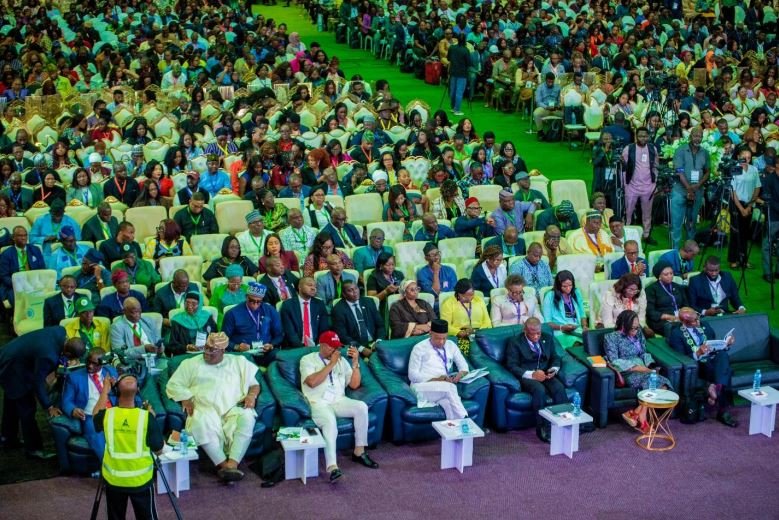
What remains is what people do with what they heard.
For an HR professional, that might mean finally measuring the business effect of a programme instead of merely reporting that it happened.
For a CEO, it could mean bringing the people conversation into strategy earlier.
For a public-sector leader, it might mean asking whether existing systems make excellent performance easier or harder and; For an organisation experimenting with AI, it could mean spending as much time thinking about people and work redesign as it does thinking about software.
There will be another conference.
There will be another theme.
But the question left behind by CIPM’s 58th International Conference and Exhibition is worth carrying beyond Abuja:
What are we doing differently because the world of work is different?
For HR, that question is becoming increasingly difficult to avoid and that is precisely the point.
Repositioning begins when the old position is no longer enough.
The post What CIPM’s 58th International Conference Revealed About Nigeria’s Changing Workplace appeared first on Channels Television.